Color Correction Chicago – Expert Color Reset at Reverie Salon River North
Color correction is the hardest thing we do. It’s also the thing we get asked about the most — because when someone’s color goes wrong, finding a colorist who can actually fix it without making it worse is terrifying. We’ve corrected hundreds of cases at Reverie: box-dye disasters, bleach damage, banding from overlapped highlights, brassy blondes that no toner seems to fix.
Every correction starts with a paid consultation and a written plan — $150 for 30 minutes with Sal for a complex correction, or $50 for 15 minutes. The fee is credited in full toward any service or product at Reverie within 30 days, and is forfeited only on a no-show or a cancellation inside 24 hours. We tell you what is realistic in one session, what will take multiple visits, and what the hair can safely handle. No guessing, no “let’s see what happens.”
We do not over-promise. If the hair needs to be rebuilt first, we say so. If a multi-session approach will give a better, healthier result, that is the recommendation you will receive.
Why corrections are our specialty
Color correction is the most demanding work we do, and one of the services we are asked for most often. I started doing corrections early in my career because the puzzle appealed to me — figuring out what went wrong, mapping the layers of damage, building a plan to get from here to there without frying someone’s hair in the process. Twenty years later, it’s still the work I find most satisfying.
Correction requires understanding layered pigment history, assessing real damage, and knowing when to stop rather than push. Every colorist at Reverie trains specifically in correction protocols through Kaizen Education, the curriculum I built and teach internationally. It is not a side skill we picked up; it is core to what we do, and that shared standard is why clients come to us after work that did not hold up or left the hair compromised.
Color Correction Pricing — What to Budget
Pricing is complexity-based, not flat-rate. Every correction is quoted at consultation — you get a full written quote before any chemistry is applied.
| Scenario | Typical Investment | Sessions | Chair Time |
|---|---|---|---|
| Consultation | $50, or $150 with Sal — credited in full toward any service or product within 30 days | 1 | 15 min · 30 min with Sal |
| Single-session correction (brassy tone, minor banding, green-pool fix) | Quoted at consultation | 1 | 3–5 hours |
| Multi-session correction (box-dye removal, failed bleach, overlapping color) | Quoted at consultation | 2–4 | 3–5 hours per session |
| Severe damage rebuild (gummy bleach damage, major over-processing) | Quoted at consult | Variable | Starts with structural stabilization |
Consultations are required for every correction — the slot length and chemistry differ from standard color services and we can't safely quote blind.
What Qualifies as Color Correction
Not every color issue is a correction. A root touch-up, a gloss refresh, a minor tonal shift — those are standard color services. Color correction is what we call the work required to undo a color problem that a standard service can't fix. The most common qualifying situations:
Bad box dye. At-home color contains metallic salts and heavy pigments that sit unpredictably in the shaft. Box dye often resists professional lightener, strips unevenly, and pulls orange or green in patches.
Bleach damage and over-processing. Hair lifted too aggressively — gummy, porous, stretching when wet, breaking at the ends.
Uneven, patchy, or blotchy results. Color that applied inconsistently — dark panels next to light ones, tonal chaos.
Orange or brassy tones. Hair that wasn't lifted far enough, or that wasn't toned properly. The most common complaint from blondes and brunettes alike. A professional toner treatment is often the first step in correcting this.
Banded roots-to-ends. Classic overlap problem — a dark regrowth band, a mid-length band, and a lighter ends band. Caused by repeated full-length application instead of zone-specific color.
Failed DIY. Kitchen attempts — purple shampoo that turned violet, developer and box dye mixed wrong, lemon juice, Sun-In, bleach baths. These nearly always need a professional reset.
Demarcation from grown-out highlights. A hard line between old color and new growth, especially visible when previous highlights sat close to the scalp.
Green or black tones from swimming or overlapping color. Chlorine-induced green in blondes. Ashy overlay that turned muddy-black when re-colored without proper prep.
Chemically compromised hair. Bleach + keratin + relaxer + repeated color — hair that's been through too many services and needs structural rebuilding alongside color repair.
If any of that sounds like you, book a color correction consultation — not a standard color service. The slot won't be long enough and a colorist can't design a real corrective plan in fifteen minutes.
How Reverie Approaches a Correction — Our 5-Step Process
Corrective color is reverse engineering. You have to understand what went wrong chemically, what the hair can tolerate structurally, and how to sequence the steps so you land on the result without breaking the hair. This is what makes it different from a regular color appointment.
Step 1 — Consultation & Strand Tests
Your colorist takes a full color history: every service in the last 18 months, every at-home product, every chemical treatment, and any trauma to the hair. We examine elasticity, porosity, and structural integrity by hand. For complex cases we run strand tests — small, isolated sections processed with the exact chemistry we're considering — so we know how your hair will respond before we commit. Nothing corrective happens until the plan is written.
Step 2 — Diagnosis & Treatment Plan
From the consultation we build a written plan: the target color, realistic interim stages, number of sessions, time between sessions, and estimated cost at each stage. If the goal isn't achievable in one visit (most complex cases aren't), we map the multi-session path. You leave knowing exactly what to expect.
Step 3 — Strategic Lifting or Tonal Removal
Depending on the case, we either lift unwanted pigment using a carefully chosen developer and lightener combination, or remove artificial deposit using a pigment-specific remover. Lift strength and application technique are calibrated to the integrity of your hair — this is where most DIY and inexperienced salon corrections go wrong. We lighten only as much as needed, zone by zone, monitoring constantly.
Step 4 — Bond-Builder & Conditioning Protocols
Bond-builders are integrated into the corrective chemistry itself — not added as an afterthought. Between steps we apply deep conditioning and structural treatments to stabilize the hair. Compromised hair gets additional protein and moisture protocols. This is what separates a correction that leaves hair healthier than it started from one that breaks it.
Step 5 — Toning & Gloss Finish
Once the lifting or removal is complete, we custom-tone using Davines professional color to land on the exact shade. A demi-permanent gloss seals the tone, adds shine, and gives the final color depth and dimension. We finish with a professional blow-dry.
Why Correction Is a Different Service from Regular Color
A standard color appointment is 60–120 minutes with predictable chemistry and a known endpoint. A correction is none of those things.
Time. Single-session corrections commonly run 3 to 5 hours. Complex cases span 2 to 4 sessions over 6 to 12 weeks.
Chemistry complexity. A colorist has to understand the pigment history stacked in the shaft — underlying warmth, artificial deposit, previous lift — the chemistry of what's being removed, and how the new target will read against what's left behind. This is applied color theory, not color-by-numbers.
Artistry. No two corrections look the same. Placement, saturation, tonal overlays — decisions made in real time while the hair is processing.
Risk of damage if done wrong. Aggressive lifting on compromised hair snaps it. Layering bleach over artificial color without proper removal creates hot spots and breakage. A miscalibrated toner locks in the wrong undertone for weeks. This is why corrective work shouldn't go to a stylist whose specialty is something else.
Single-Session vs Multi-Session Correction — Which Do You Need?
Many corrections that look simple at first need to be staged. The biggest driver is the health of the hair going in, not the severity of the color problem.
| Factor | Single-Session | Multi-Session |
|---|---|---|
| Typical cases | Brassy tone, minor banding, green from pool, grown-out highlights | Box-dye black-over-blonde, failed bleach, overlapping color, severe over-processing |
| Chair time | 3–5 hours | 3–5 hours × 2–4 sessions |
| Time between sessions | N/A | 3–6 weeks |
| Total cost | Quoted at consultation | Quoted at consultation, as a package |
| Hair condition going in | Healthy, elastic | Compromised, porous, stretched |
Your colorist makes this call at your consultation based on strand tests, elasticity reading, and color history — not based on your preference. We will never compress a multi-session correction into a single visit if your hair can't tolerate it.
Our Color Correction Specialists
Every stylist at Reverie is trained to an elite standard — but corrective color is its own discipline, and these three are the ones we route the most complex cases to.
Vicki O'Connor — Master Colorist
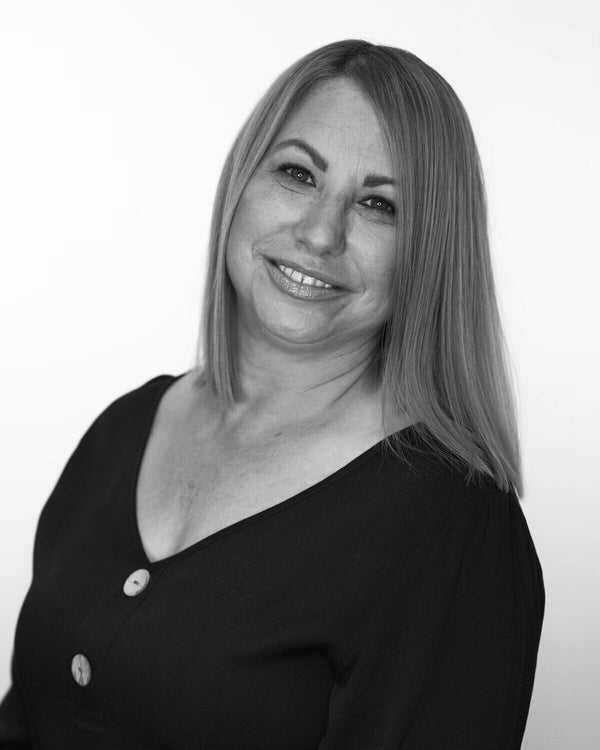
Over 20 years behind the chair and the distinction of Master Colorist. Vicki trained in Parma, Paris, Amsterdam, and Barcelona, was one of Davines' key trainers when the brand launched in North America over 16 years ago, and was coached and developed by Sal for more than a decade before he brought her to Reverie — where she now helps train the team. A Kaizen Education team member — she doesn't just execute corrective color at the highest level, she teaches it. Clients love her for deep technical knowledge and the calm she brings to high-stakes appointments.
Marissa White — Color & Curls Specialist
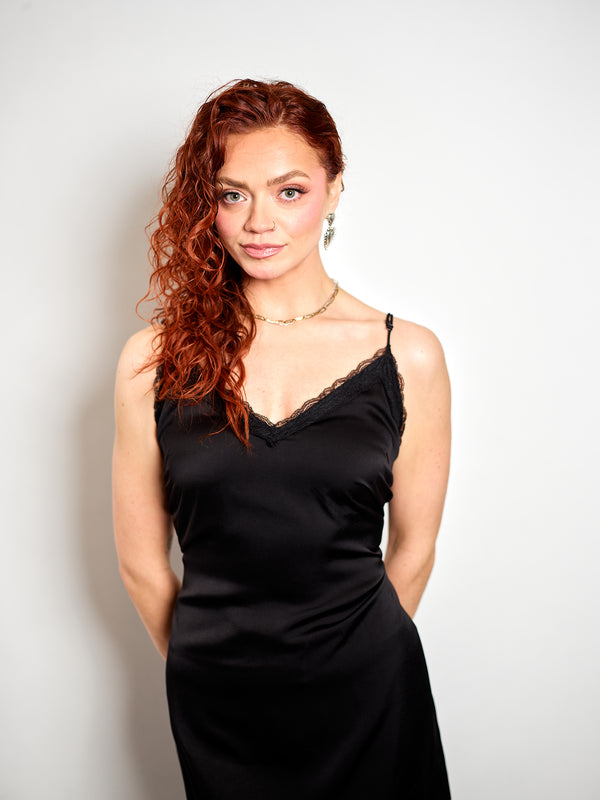
Over three years of intensive training under Sal Misseri, plus an Aveda Institute background and additional training with Kaizen Education, Michael Polsinelli, and Ian Michael Black. Marissa's curly and textured hair specialty makes her especially strong at corrections where texture changes how color reads — she reads both without guessing.
Common Situations We Fix — Real Scenarios, Real Outcomes
Box-dye black over previously-blonde hair, banded roots to ends. A three-session reset. Session one: pigment removal on the darkened mid-lengths and ends, plus deep conditioning. Session two (four weeks later): strategic lightening on remaining darkness plus tonal overlay to unify the base. Session three: finishing balayage and custom Davines gloss. Result: soft blonde with depth, even root to tip, no banding in any light.
Blonde that went brassy and uneven after a prior service elsewhere. Often a one-session correction. Targeted lifting on orange and gold zones, bond-builder between phases, then a precision Davines toner that neutralizes warmth without going ashy. Result: clean, bright blonde with tonal accuracy you can see in photos.
Bleach damage from at-home lightener — hair gummy, stretching when wet. Stabilization first. Appointment one is structural: no new chemistry, just rebuild — protein and moisture protocol, bond-building treatment, and an honest conversation about length. Subsequent sessions introduce gentle tonal correction once the hair is strong enough. Result: hair returned to integrity, tone corrected, length preserved where possible.
Grown-out highlights with a hard demarcation line and four inches of regrowth. Balayage correction with a custom root shadow. We paint a soft gradient from root to mid-length that blends old highlights into natural regrowth, then custom-tone through the lengths. Result: seamless, low-maintenance color that reads as if it grew out of your head.
Green tones in blonde hair from a summer of pool swimming. A clarifying prep followed by a violet-toned gloss that neutralizes the green. Usually a single appointment, under two hours.
Davines — Why Product Choice Matters in Correction
We use Davines professional color and care exclusively. Davines is a B-Corp certified Italian brand built on performance, sustainability, and precision tonal accuracy. When hair is already compromised going into a correction, the gentleness of the chemistry matters as much as the skill of the hand holding the brush.
The Davines color system gives our colorists the tonal control corrective work requires. Their bond-supporting and repair lines (NouNou, Love, Melu, Minu, Finest Pigments) slot directly into the correction protocol to protect hair through multiple chemical stages. Their conditioning masks keep the hair pliable while we work. We also offer K18 bond-building treatments for clients who need maximum structural repair during or after corrective work.
Frequently Asked Questions
How much does color correction cost in Chicago?
Pricing is based on complexity and number of sessions — not a flat rate, and always quoted at consultation. Single-session corrections and multi-session plans (box-dye removal, severe over-processing) vary widely depending on chair time, product, and your hair's condition. You get a transparent, written quote before any chemistry is applied. No surprises at checkout.
How long is a color correction appointment?
A single corrective session typically runs 3 to 5 hours. Consultations are booked separately — 15 minutes for $50, or 30 minutes with Sal for $150 — and happen before the service appointment.
Is color correction safe on already-damaged hair?
Yes, when it's done properly. We prioritize structural integrity before aesthetics — if your hair can't tolerate the full planned chemistry in one session, we stage the work across multiple sessions and stabilize between them. We will tell you honestly if a correction isn't safe to pursue immediately.
Can you fix hair that's been through multiple rounds of color?
In most cases, yes — but multiple previous rounds often mean multiple sessions. Layered artificial pigment and cumulative porosity take more work to unwind. We map the sequence at consultation and tell you what's realistic.
How do I book a color correction at Reverie?
Start with a consultation: book online at booking.mangomint.com/reveriesalon, use the Find Your Stylist quiz to get matched with a corrective specialist, or call (312) 955-0083 (or text (773) 378-9288). All correction clients are required to have a consultation before the service appointment.
What should I bring to my consultation?
Photos of your hair when you liked it (so we understand the tone history), and the names of any products used in the past 18 months — especially any at-home color or box dye. An empty box or bottle is ideal.
Can you color-match after a correction is complete?
Yes. Once corrective work is done, we build a maintenance schedule — tone refreshes, gloss appointments, and custom at-home care — that keeps the new color consistent.
What's the touch-up timeline after a correction?
Maintenance cadence returns to normal once you're through: 6–8 weeks for highlights or traditional color, 10–14 weeks for balayage with a gloss in between. Clients in later stages of a multi-session correction may have shorter intervals during the transition.
Will I lose length during a correction?
Often, no. We prioritize preserving length and stage the chemistry to protect the ends. If hair is so compromised that pushing through would break it, we recommend a conservative trim and rebuild — better to land on healthy, beautiful color than hold compromised length that breaks off anyway.
How do I care for my hair between appointments during a correction?
Low heat, sulfate-free shampoo, weekly protein and moisture masks, cool rinse water, and a UV/heat protectant whenever you style. We design a home-care kit at your consultation — the right Davines products make a measurable difference during recovery.
Why does structured training matter for color correction?
Correction involves reverse-engineering previous chemistry, managing porosity, and protecting structural integrity. A consistent training system produces more reliable judgment and more predictable outcomes than experience alone. Every Reverie colorist trains in correction protocols through Kaizen Education.
Real Color Corrections — Before, After, Sometimes In Between
Some of these took one session. Some took three. Every plan is built from a consultation.


Protect the Investment
Color correction is real chemistry. These three products are non-negotiable for the first 8 weeks after your service.
Tell Us What Happened
Every correction starts with a consultation — $150 for 30 minutes with Sal for a complex correction, or $50 for 15 minutes, credited in full toward any service or product at Reverie within 30 days. Bring photos of your current color, photos of the color you want, and your hair history. We'll build a plan that protects your hair and gets you there — even if it takes two visits to do it right.
Already a Reverie guest? Skip to direct booking →
Send us a photo to plan ahead: Text (773) 378-9288
Color Correction — What to Expect
Can color correction be done in one session?
Sometimes. Light brassiness, a bad toner pull, or a single banded highlight can be fixed in one. Box-dye reversal, dramatic color changes, or rescuing severely over-processed hair almost always takes two or three sessions spaced 4–6 weeks apart. Hair health comes first.
How much does color correction cost?
Color correction is always quoted at consultation — every correction is different, and pricing depends on complexity, chair time, and the number of sessions. Multi-session plans are quoted as a package, in writing, before any chemistry is applied.
How long does a color correction appointment take?
Plan on 4 to 6 hours for the first session. Bring a phone charger, snacks, and patience — rushing is what created most of the problems we fix.
Will my hair feel damaged after?
Not at Reverie. We pair every correction with bond-protecting chemistry (K18) and finish with an in-salon Heart of Glass treatment. Most clients say their hair feels stronger afterward than when they walked in.
Do I need to do anything before my appointment?
Two things. (1) Don't wash your hair the morning of — natural scalp oils protect the scalp during lightener. (2) Bring photos of every color service you've had in the past two years, even at-home ones. We can't fix what we don't know about.
Rebuilding after a correction
The chemistry we just did is only half of it — the eight weeks that follow are the other half, and these are the three we send home with correction clients.
- K18 Leave-In Molecular Hair Mask — $75. Four minutes on clean, towel-dried hair, no rinse, skip your conditioner that wash. It is the same repair step we ran on you between lightening phases, so the bonds keep knitting after you leave the chair.
- K18 Detox Shampoo — $38. Color-safe clarifying that lifts product buildup and copper without stripping — copper is what quietly pulls a fresh toner back toward brass.
- Davines Nounou Hair Mask — $45. Use it in place of your conditioner once a week. It is what we reach for behind the chair after a big lightening session, and it puts softness back into the ends without coating them.
The rest of what we keep on the shelf for hair in recovery is on our stylist favorite hair products page.
Color correction slots are limited — most appointments run 4–6 hours and we only take two corrections per stylist per week. Reserve a consultation →
Visit Reverie Salon — River North, Chicago
Address: 300 W Grand Ave, Suite 5, Chicago, IL 60654 Call: (312) 955-0083 Text: (773) 378-9288 Email: info@reveriesalon.com Hours: Tue–Thu 12pm–8pm | Fri 10am–7pm | Sat 9am–4pm | Closed Sun & Mon Rating: 4.9/5 on Yelp
Book Your Color Correction Consultation → Find Your Perfect Colorist →
Dealing with a color situation you need fixed? Let Reverie reset it right. Book Your Color Correction Consultation → | Find Your Colorist →
What it costs
Color correction at Reverie Salon in River North, Chicago is never priced in advance. There is no starting price and no flat rate for it: what a correction takes depends on the pigment already in the hair and on what the hair can safely tolerate, so it is quoted only at a paid consultation, in writing, before any chemistry is applied. The consultation itself is $50 for 15 minutes, or $150 for 30 minutes with Sal, and that fee is credited in full toward any service or product at Reverie within 30 days. Every artist sets their own pricing, and your quote is confirmed with you before anything is charged. See the full price list for our standard color and cutting services.
Explore More
Best Haircut in Chicago · Best Hair Stylist in Chicago · Best Hair Salon Chicago · Best Balayage Chicago · Hair Extensions Chicago · Bridal Hair Chicago
Recommended Products for Color-Treated Hair
Rebuild strength and protect your corrected color at home
